Help Your Dog Feel Calmer When You Leave, Without Waiting for a $150 to $300 Dog Behaviorist Appointment
A 21-day at-home protocol for dog owners who have tried everything and are tired of guilt, neighbor complaints and chewed baseboards.
Read what other dog owners say about it below.
Instant access. Start today. Secure checkout.
Visa, Mastercard, American Express, PayPal, Apple Pay, Google Pay
A step-by-step PDF guide with seven ready-to-use tools, delivered to your inbox the moment you order.
You Know the Moment Your Dog Hears Your Keys
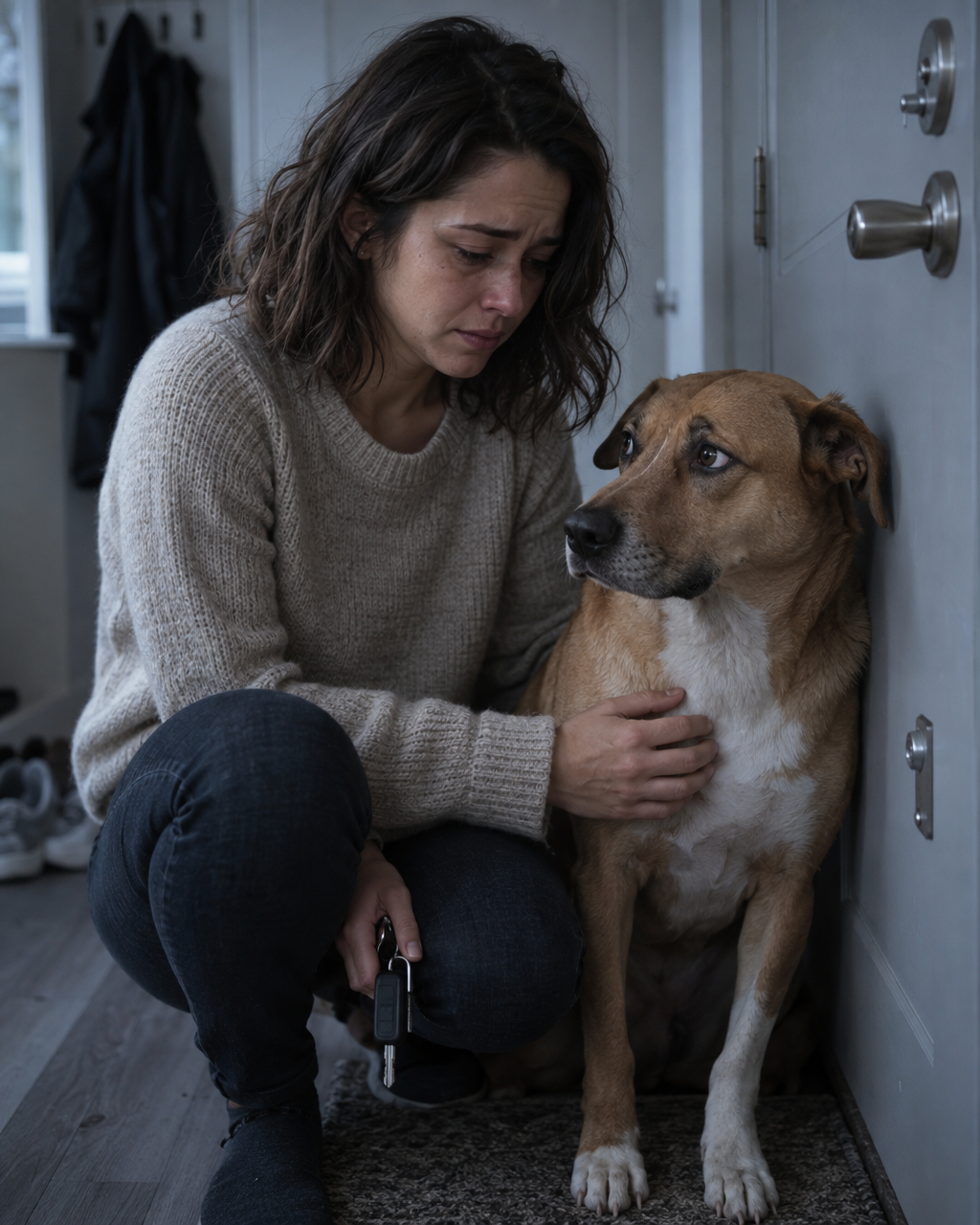
It is a weekday morning. You reach for your keys, and your dog’s whole body changes. The pacing starts. The whining starts. By the time your hand is on the door, they are looking at you as if you are leaving forever.
Then you get to your desk, open the camera app and watch. Pacing. Howling. Scratching at the door. You feel sick for the rest of the day, and the guilt follows you home to the scratched door frame, the chewed baseboards and maybe a letter from the neighbors.
You adopted this dog to give them a better life. Now every morning feels like you are failing them.
It is not bad behavior, and it is not your fault
Here is what most advice never tells you. A dog with true separation anxiety is not being stubborn, bored or spoiled. They are panicking. In veterinary behavioral science, true separation anxiety is classified as a panic disorder, and no amount of obedience training can override a panic response that is already in motion.
You have probably said it yourself: “I tried the diffuser, the chews and the calming vest, and nothing touched it.” You were not doing it wrong. Most of what you have been told goes after what you can see, not the panic underneath.
So why did every one of those fixes fall short? Here is what is really going on.
Why the Four Things You Tried Never Reached the Real Problem
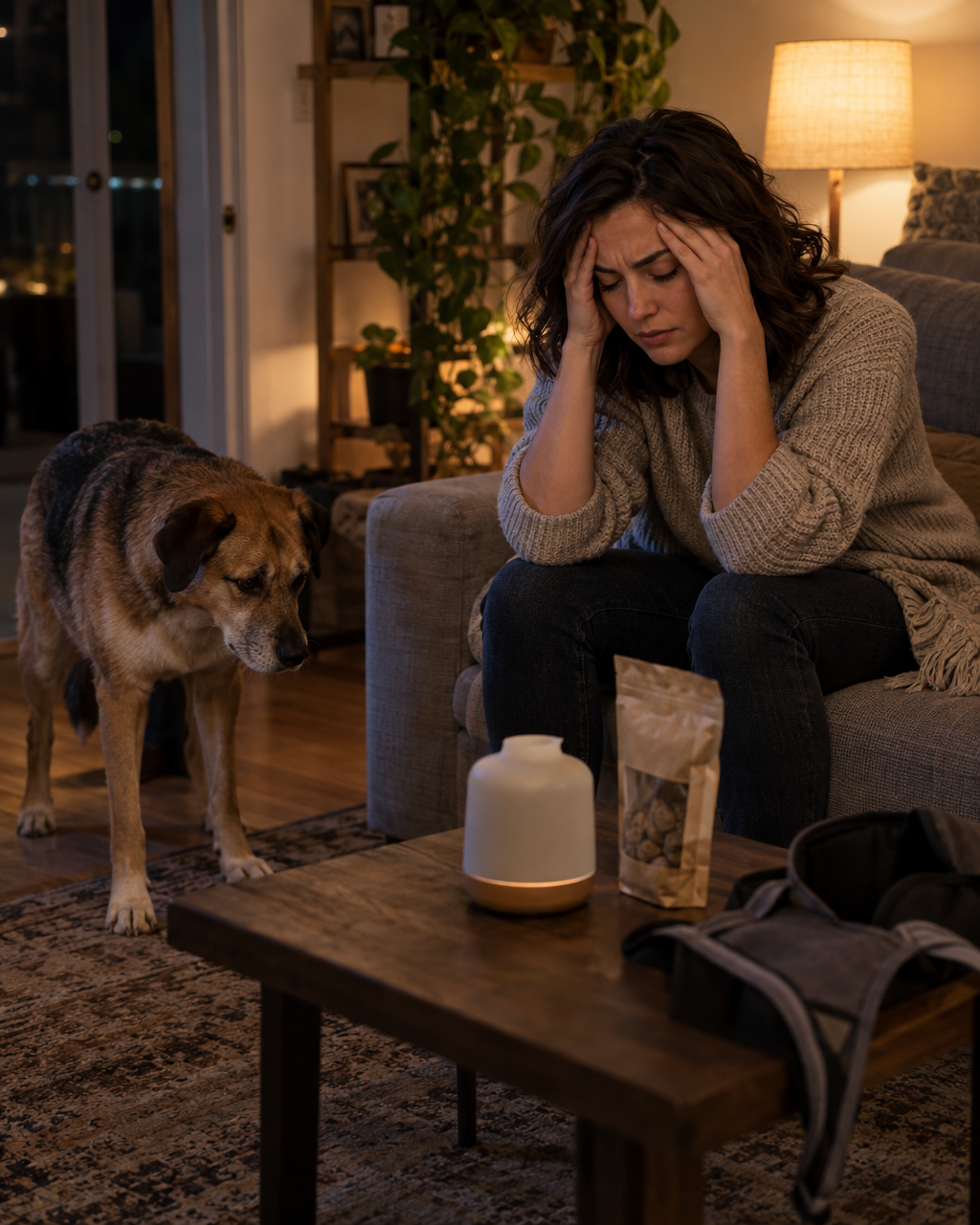
You did what any caring owner would do. You searched at midnight, you watched the videos and you bought what promised to help. Some of it may have helped for a little while, but none of it reached the root of the panic.
That is not a reflection on you. Each of these fixes was built to soothe, distract or contain. A panic response needs something different, and until now nobody handed you that. Here is where each one runs out of road.
Being shut in can raise the stress of a dog who is already panicking.
They may take the edge off for a while, but the panic comes back.
They do not fix the panic response when you leave.
Your dog is listening for you, not for the show.
Crate training
A crate is the standard answer, but for a dog who is already panicking, being shut in can raise the stress instead of lowering it. You followed the usual advice, and the usual advice can backfire.
Calming chews
They may take the edge off for a short while, but the panic comes back once the chew is gone. They soothe the moment. They do not teach your dog that you always come back.
Diffusers and calming vests
They can ease general stress, and some dogs find them comforting during storms. They do not fix the panic response that starts the moment you reach for your keys.
Leaving the TV on
Your dog is listening for you, not for the show. The background noise does not change what your leaving means to them.
Instant access. Start today. Secure checkout.
You are in good company. Here is how common this really is.
You Are Far From the Only One
20 to 40%
of US pet dogs
Studies estimate that this share of pet dogs in the US show clinically significant separation anxiety symptoms.
65 million+
US dog-owning households
With more than 65 million dog-owning households in the US, a lot of owners are quietly dealing with the same thing.
Every week without a plan may mean another week of camera-checking, guilt and worry about the next neighbor complaint.
The pattern can be interrupted. First, a few things most advice gets backwards.
4 Myths That Keep Dog Owners Stuck
The myth
- A calm, boring exit makes the panic fade.
- A treat on the way out settles the panic.
- A tired dog is a calm dog.
- Ignore it, and they will learn.
The reality
- A calm exit helps only as part of a graduated system.
- A dog already in stress cannot be soothed by a treat at the door.
- Exercise helps, but it does not touch the fear that starts with your keys.
- Leaving a dog to panic does not teach them you are safe to leave.
Make your goodbyes calm and boring and the panic will fade.
A calm exit is part of a real protocol, but only as part of a graduated system. If the exit itself has not been desensitized, a dog with true separation anxiety can still react with fear.
Give your dog a treat on the way out and they will settle.
If your dog is already in a stress response when the treat arrives, the good feeling cannot compete with what their nervous system is already doing.
Tire them out before you leave and they will rest.
Exercise can lower baseline arousal, and it is worth doing. It does not touch the fear that begins the moment your keys come out.
Ignore the panic and they will learn.
Leaving a dog to panic without help does not teach them your departure is safe. It can hide the behavior you see while the fear continues, or make it worse.
So what actually helps a dog who panics when you leave? It starts with a different way of working.
Introducing The 21-Day Departure Desensitization Protocol

Here is the shift that changes everything: stop trying to correct the behavior and start working with the panic.
This protocol is built on systematic desensitization and counter-conditioning, the two approaches most consistently supported by veterinary behavioral science for true separation anxiety. In plain terms, you show your dog the things that signal you are leaving, at a level so small that the panic never switches on, and you move forward only when your dog is ready.
Because a dog who is not panicking can actually learn. That is the whole idea, and it is what the standard advice leaves out.
Learn what sets off the panic and why every earlier fix fell short.
Work through a graduated 21-day protocol at your dog's own pace.
Keep the progress with a five-minute morning practice and a recovery plan.
Step 1, Diagnose: understand the panic
Learn what triggers the panic and why every earlier attempt fell short. You map your dog’s departure cues and learn to read the stress signals that tell you when to stop, so you always work below the panic line. Chapter 1 also gives you a short routine you can try the same day.
Step 2, Apply: 21 days, one small step at a time
Week 1 takes the alarm out of departure cues like keys, shoes and coat, one at a time. Week 2 introduces micro-departures that start from your dog’s own threshold. Week 3 builds toward longer real departures, with tools for the days you cannot wait. Your dog’s stop signals, not the calendar, set the pace.
Step 3, Maintain: keep the calm in place
A five-minute morning practice helps hold the progress, a Regression Recovery Protocol shows you what to do after a setback, and you update your map as your life changes.
Ready to see everything that comes with it?
Everything you have just read now lives in one complete, step-by-step guide.
Introducing The Separation Anxiety Solution
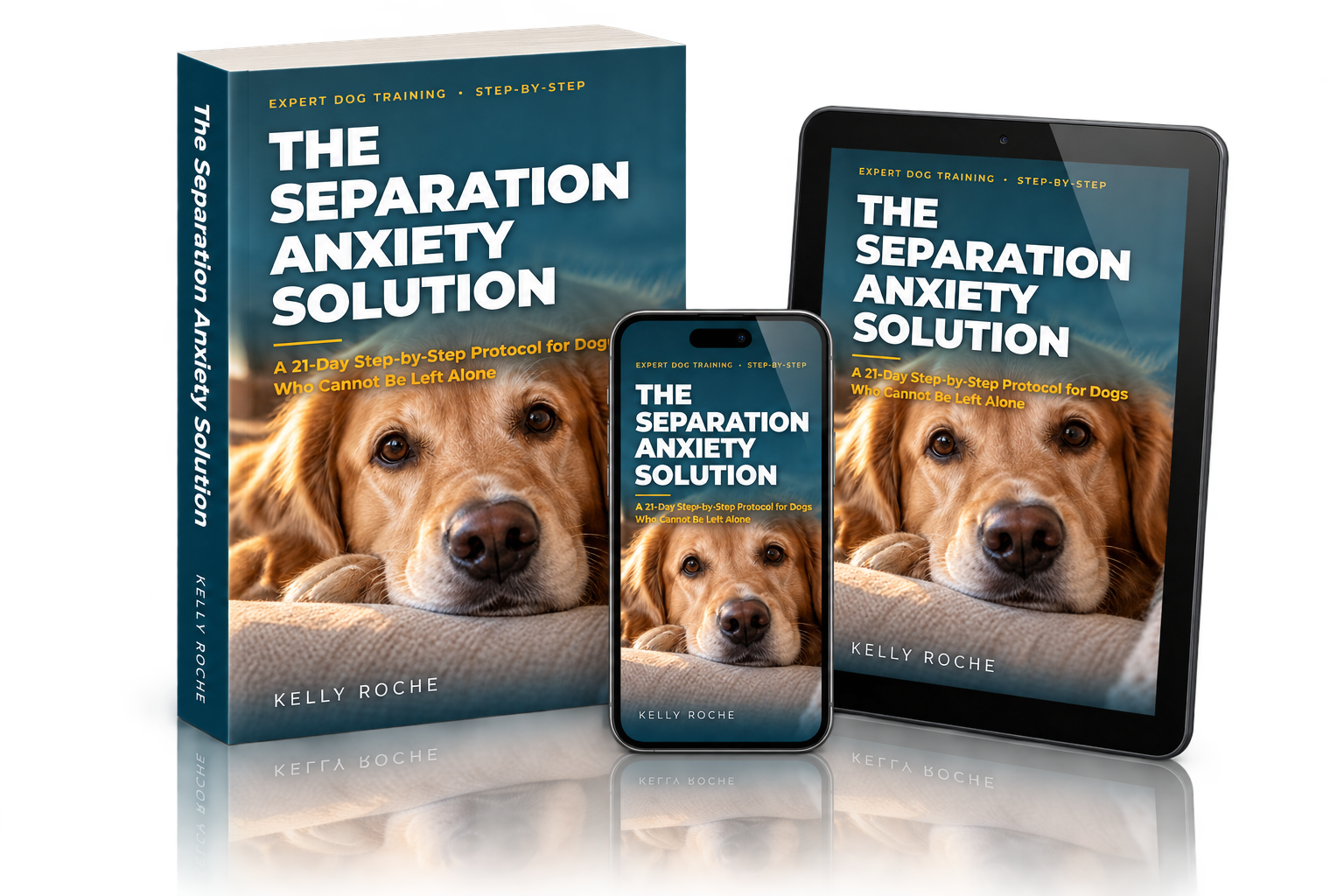
- A Landlord Evidence Log, so you can show your landlord you are taking this seriously.
- A day-by-day 21-day plan, so you always know what to do next.
- A Real Departure Management Plan, so you know what to do when you must leave before your dog is ready.
- A Dog Body Language Reading Guide, so you spot stress signals early and never push too fast.
- A Regression Recovery Protocol, so one hard week does not feel like starting over.
- Seven ready-to-use tools, so the thinking is done for you.
Your PDF arrives by instant download link by email, plus a download button on the thank-you page, immediately after payment. Lifetime access, on your phone, tablet, laptop or desktop.
Most people start with Chapter 1, The Pre-Protocol Calm Baseline. It gives you a short routine you can try the same day, and it opens your 21 days.
Here is exactly what is waiting for you inside.
Here is exactly what is waiting for you inside:
Introduction: You Have Tried. You Have Not Failed.
Drop the guilt and see why this is panic, not bad behavior, so you can start from the right place.
Chapter 1: Your First Win, The Pre-Protocol Calm Baseline
A short routine you can try the same day, so your dog experiences calm before the real work begins.
Chapter 2: Why Nothing You've Tried Has Worked, The Real Science of Separation Anxiety
See exactly why the usual advice falls short, so you stop blaming yourself or your dog.
Chapter 3: Know Your Dog, Mapping the Triggers and Reading the Signals
Build your Departure Cue Hierarchy Map and learn the stress signals, so you know when to stop and when to move on.
Chapter 4: Week 1, Defusing Your Dog's Departure Triggers
Take the alarm out of keys, shoes and coat one cue at a time, with your 21-Day Tracker and a Week 1 Progress Check so you know when to move on.
Chapter 5: Week 2, The Micro-Departure Method
Practice tiny real departures from your dog’s own threshold, so progress stays below the panic.
Chapter 6: Week 3, Building to a Full Day Away
Build toward longer absences, with your Real Departure Management Plan and Landlord Evidence Log for the days life gets in the way.
Chapter 7: The Long Game, Your Five-Minute Morning Practice and What to Do When Things Go Wrong
Keep the calm in place and recover quickly after a setback, so one bad week does not undo your progress.
Closing: A Final Word from Kelly
A last word of encouragement and guidance on when a professional can help, so you always know your next step.
Your seven ready-to-use tools
- The 21-Day Departure Desensitization Tracker
- The Departure Cue Hierarchy Map
- The Dog Body Language Reading Guide
- The Real Departure Management Plan
- The Regression Recovery Protocol
- The Landlord Evidence Log
- The Safe Calming Supplement Reference
Plus Week 1 and Week 2 Progress Checks, so the daily practice is simple to follow.
See why this is panic, and why the usual fixes fell short.
Week 1: take the alarm out of your departure cues.
Week 2: build micro-departures from your dog's own threshold.
Week 3 and beyond: longer departures, plus a plan for setbacks.
Don’t just take our word for it. Here is what dog owners say.
What Dog Owners Say
Sabine T. Verified ★★★★★
This guide helped me realize where I had been going wrong with my dog’s training. It gave me valuable insights into how to approach the problem and a clearer starting point. Although some concepts took a little time to understand, I now feel much more hopeful and confident about helping my dog improve.
Thomas P. Verified ★★★★★
This approach made a real difference to my dog’s separation anxiety. After 23 training sessions over a month, my dog went from whining, barking, scratching at the door and becoming extremely distressed to staying much calmer when I leave. It takes commitment and consistency, but the improvement has been well worth the effort. Highly recommended!
Ken S. Verified ★★★★★
My rescue dog had significant anxiety and struggled terribly with being left alone. Following this approach, we gradually made progress, and my dog can now stay alone for several hours without destroying the door, disturbing the neighbors with constant barking or becoming extremely distressed. It has given us both a better quality of life and restored some much-needed freedom to my daily routine.
Jalen F. Verified ★★★★★
After adopting a rescue dog, I wanted to understand separation anxiety and how best to manage it. This guide helped me develop a basic training strategy and understand what a training session could look like. I feel much less stressed and better equipped to support my dog. It’s an excellent starting point for anyone facing similar challenges.
Irene Verified ★★★★★
Separation anxiety can be heartbreaking to witness, and understanding what your dog is experiencing is an important first step. This guide helped me understand the condition more clearly, recognize common misconceptions and appreciate the importance of using the right approach. I would recommend it to anyone whose dog struggles with being left alone, even if the symptoms seem mild.
Mel T. Verified ★★★★★
This guide helped me better understand my dog’s behavior and tell possible separation anxiety apart from other behavioral issues. It gave me useful ideas for gradually helping my dog become more comfortable alone and a clearer way to discuss the problem with a behaviorist. Progress may take time, but I now have a more structured approach and feel more optimistic about the outcome.
Kelsey D. Verified ★★★★★
Clear, concise and easy to follow. The information is organized logically, making it simple to understand the different behaviors dogs display and how to identify possible separation anxiety. I especially appreciated the reminder that not every behavioral issue is separation anxiety. It’s a useful guide for dog owners and trainers, with sensible advice on when professional support may be needed.
Patrick V. Verified ★★★★★
Very helpful and informative. It explains how to recognize genuine separation anxiety rather than assuming every unwanted behavior is caused by it. It makes the process feel much more manageable, especially when you’re feeling overwhelmed and unsure where to begin.
How It Compares
A qualified veterinary behaviorist can cost $150 to $300 per session, before follow-up appointments. The Separation Anxiety Solution is $16.97, once.
Source: the Introduction of The Separation Anxiety Solution by Kelly Roche.
| The Separation Anxiety Solution | Calming products on their own | A veterinary behaviorist | |
|---|---|---|---|
| Price | ✔ $16.97, one time | Varies by product | $150 to $300 per session, before follow-up appointments |
| Speed of Results | ✔ A first step you can try the same day, then a 21-day plan paced by your dog | ✘ Not a training plan | ✔ Tailored to your dog, after you book and attend sessions |
| Ease of Use | ✔ Read at home, on your own schedule | ✔ Simple to give or use | Appointments to schedule |
| Ongoing Cost | ✔ None, one payment | Varies by product | ✘ Follow-up appointments may add up |
| Support | ✔ Seven tools and three bonuses | Product instructions only | ✔ Personal professional guidance |
| Guarantee | ✔ 30-day money-back guarantee | Varies by brand | Varies by provider |
A professional can add personal guidance. This guide is designed to work alongside professional support, not replace it.
Wait, I Am Not Done Yet. If You Are Among The Next 50 Buyers, You Also Get These Free Gifts:
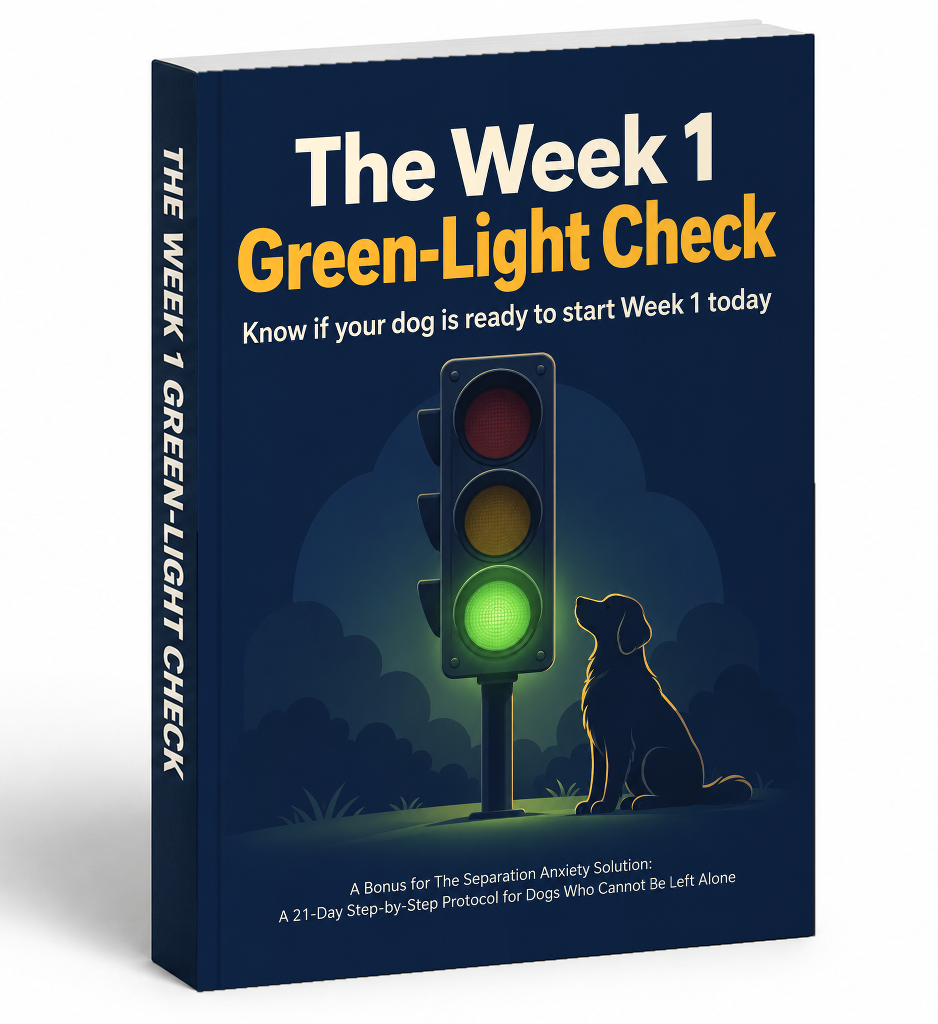
The Week 1 Green-Light Check - Value: $27
An 8-item Start-Safe Screen that ends with a clear result: Start, Start and book a vet check, or See a vet first. It also includes a Vet-Visit Question Sheet and a Week 1 Slot Planner. It helps you begin Week 1 with confidence instead of stalling after Chapter 3.

The Neighbor & Landlord Script Pack - Value: $37
A neighbor door note and script, a landlord reply template, a follow-up template, a Say / Don’t Say list and a plain-language caution box (not legal advice). It helps you talk to your neighbors and landlord calmly and in your own words.
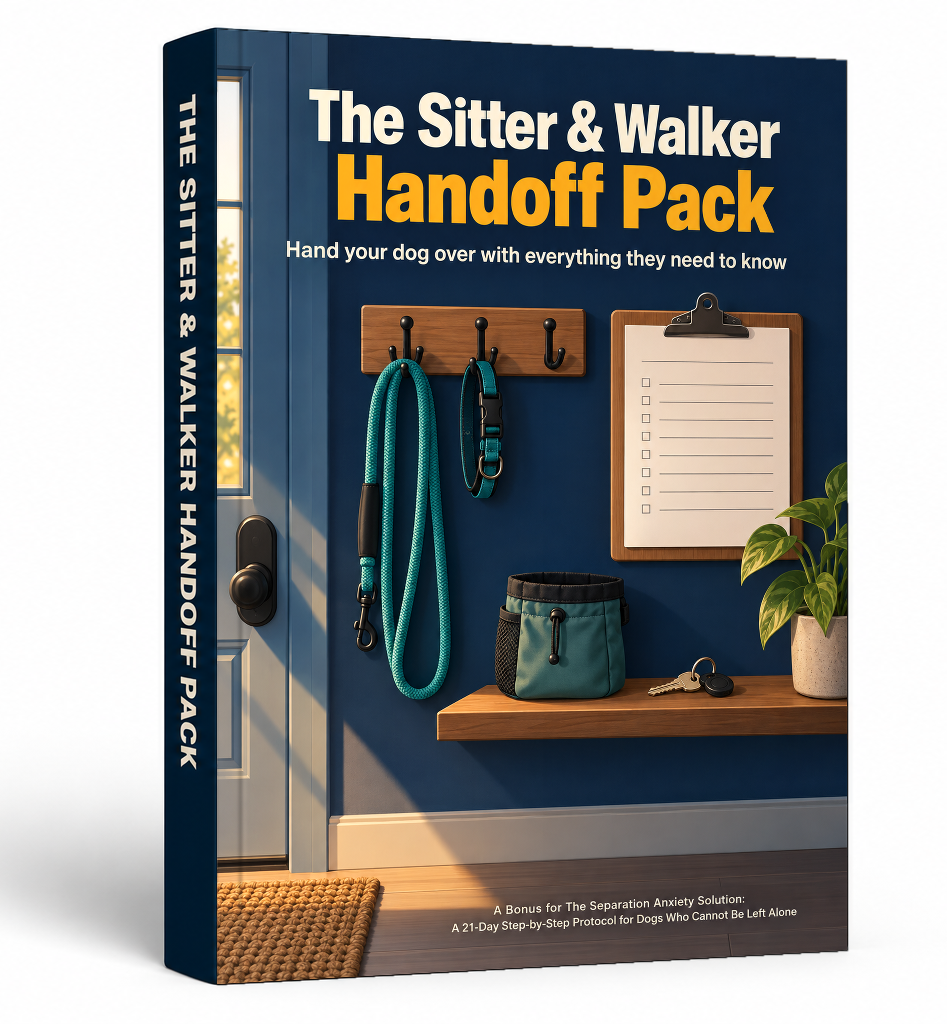
The Sitter & Walker Handoff Pack - Value: $17
A sitter handoff script, a report-back card and screening questions for a new walker or daycare. It helps you hand your dog over with confidence on the days you have to leave before your dog is ready.
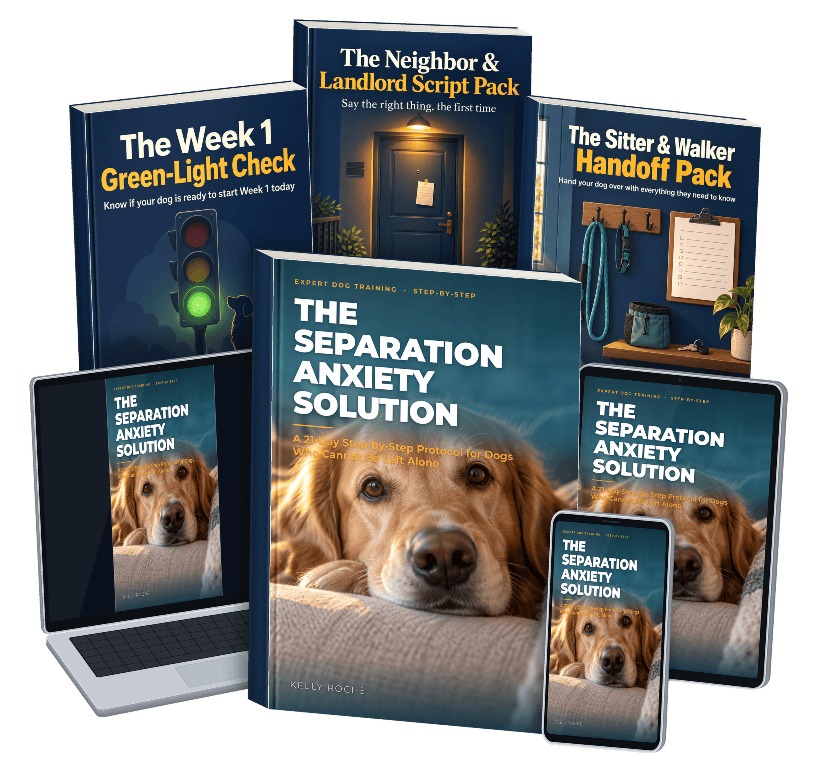
Free with every order among the next 50: The Week 1 Green-Light Check, The Neighbor & Landlord Script Pack and The Sitter & Walker Handoff Pack.
Everything you get today
- The Separation Anxiety Solution (the full guide with 7 tools): $16.97
- The Week 1 Green-Light Check: $27
- The Neighbor & Landlord Script Pack: $37
- The Sitter & Walker Handoff Pack: $17
Total value: $97.97. Today: $16.97. You save $81.00.
That is $2.42 per chapter, for skills and tools you may use for years. That is less than a cup of coffee per chapter.
If a calmer goodbye sounds good to you, click the button below to get your guide and every bonus today.
Secure checkout. Instant access. Bonuses included today.

Still on the fence? I completely understand. That is why I am taking all the risk away from you.
When you get The Separation Anxiety Solution today, you have a full 30-day period to go through everything, try the method and see how it works for you. That is 30 days with every chapter and every bonus, with zero financial risk on your side.
If at any point within that time you decide it is not for you, for any reason or for no reason at all, simply send one email and you will get a full refund.
I can make this promise because I believe in this method. I would rather you try it with complete confidence than hesitate and stay stuck.
The only way you lose is if you do nothing.
If a calmer goodbye is what you want, click the button below and start today.
Secure checkout. Instant access. 30-day money-back guarantee, refund by one email.
Two Paths From Here
Without The Separation Anxiety Solution
- Another morning watching the camera app at work.
- Neighbor complaints and lease worries keep building.
- More money spent on products that do not reach the panic.
- Guilt every time you pick up your keys.
- No plan for when to move forward or what to do after a setback.
With The Separation Anxiety Solution
- A clear day-by-day plan for 21 days.
- A way to read your dog's stress signals early.
- A log and scripts that may help you talk to neighbors and your landlord.
- A plan for the days you have to leave early.
- A recovery plan that may help you bounce back after a setback.
Your Questions, Answered
How is it delivered, and can I print it?
What device do I need?
Do I need prior experience, or is this right for a complete beginner?
What is the refund policy?
How quickly will I see results?
What makes this different?
I have tried everything already. Why would this be different?
Is this a substitute for veterinary or professional advice?
Just ordered!8:12 AM
Order confirmed.8:31 AM
Payment done, order number came through.9:04 AM
Just bought mine.9:47 AM
Purchased. Can't wait to start.10:20 AM
Just ordered!11:05 AM
Order confirmed.11:38 AM
Just bought mine.12:15 PM
Thank you all. Your order confirmations are on the way.12:30 PM
The next 50 buyers get all 3 bonuses free.
If a calmer goodbye sounds good to you, click the button below to get your guide now.
Secure checkout. Instant access. Bonuses included today.
If you close this page without acting...
- Tomorrow morning looks like this morning.
- The camera app stays open at your desk.
- The worry about the next complaint stays with you.
If you get The Separation Anxiety Solution today...
- You have a clear plan to start with the very next morning.
- You know what to watch for, and when to hold.
- You may feel calmer about leaving, one small step at a time.
Imagine Leaving for Work Without the Knot in Your Stomach
Every week without a plan may cost you another week of guilt, camera-checking and worry about your neighbors.

Starting is easier than you think. Chapter 1 gives you a short routine you can try the same day, and every step after that is laid out for you, week by week, at a pace your dog can follow.
Picture a morning where you pick up your keys and your dog stays calmer. No camera app on your lap at your desk. No dread on the way home. Just a dog who is learning, step by step, that you always come back.
If that is the morning you want, click the button below and take the first step today.
Secure checkout. Instant access. 30-day money-back guarantee, refund by one email.
The next 50 buyers get all 3 bonuses free.